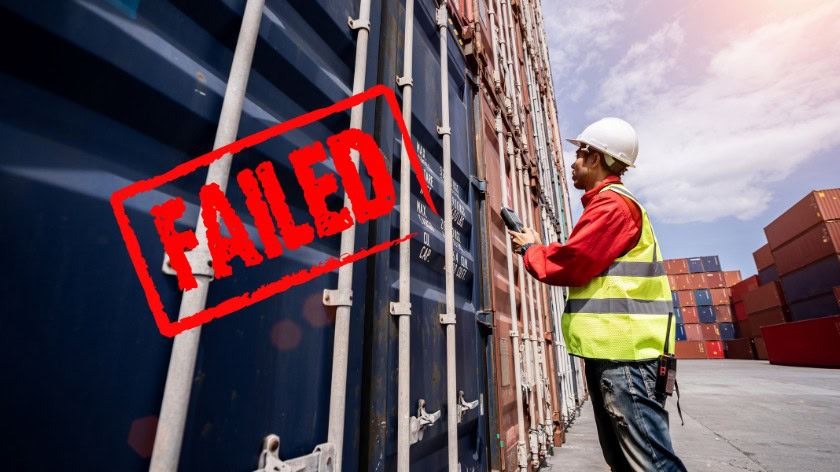
Technology has brought us—and will continue to bring us—great advances, but that does not mean we are free from setbacks. Importing remains a complex activity with a high level of risk, even in highly digitised environments. We have seen this first-hand: in recent years, many companies have relied on technology as an almost complete solution to the challenges of international trade, relying on management software, digital payment platforms or advanced traceability systems, and leaving something that remains essential in the background: people.
Operational experience shows that technology alone does not eliminate the risks inherent in importing. It can reduce errors, speed up processes and improve supply chain visibility, but it cannot replace control at source, knowledge of the supplier market or strategic decision-making based on real experience.
The key is to understand technology as a support tool and not as a substitute for human control. Without good sourcing, supplier audits and quality control at source, financial, logistical and legal risks remain present and can end up materialising with a significant impact on business profitability.
Risks inherent in international trade
International trade combines multiple variables that, in many cases, are beyond the direct control of the importer. Economic, regulatory, logistical and cultural factors interact with each other, creating an environment in which any failure can have significant consequences.
Unlike local trade, importing involves operating in different jurisdictions, with changing regulations and suppliers located thousands of kilometres away. This distance makes direct supervision difficult and increases dependence on intermediaries, which increases operational risk (and, it must be said, import costs as well).
For this reason, effective international trade management requires identifying risks from the initial negotiation phase, assessing their potential impact and establishing preventive measures that go beyond simple process digitisation.
Economic and financial impact on imports
Exchange rate fluctuations
One of the main financial risks in importing is exchange rate volatility. Currency fluctuations can substantially alter the final cost of a product between the time of negotiation and actual payment to the supplier.
Many companies underestimate this risk and fail to implement hedging or financial planning strategies. As a result, initially profitable margins can be reduced or even disappear due to unfavourable movements in the currency market.
Technology allows these fluctuations to be monitored in real time, but it does not eliminate the risk if there is no clear financial policy and proper planning of payments and contracts.
Consequences of delivery delays
Delays in the delivery of goods are another critical factor with a direct economic impact. Production problems, port congestion, customs inspections or transport incidents can alter the expected delivery times.
These delays affect product availability, cause stock shortages and can lead to contractual penalties or loss of customers. Although digital platforms provide information on the status of shipments, they do not prevent the problem from occurring.
Preventing these risks requires proper logistics planning, realistic time buffers and, above all, control at source to detect problems before shipment.
Logistical challenges in the supply chain
International logistics is one of the most sensitive links in the import chain. Despite advances in traceability and tracking, the transport of goods remains exposed to damage, loss and operational errors.
The distance between the supplier and the final destination multiplies the chances of incidents occurring. Once the goods have left their point of origin, the options for correction are drastically reduced and the costs of any error increase exponentially.
Therefore, technology must be accompanied by physical control processes, such as pre-shipment inspections and cargo validations, which reduce risk before the product enters the international logistics chain.
Customs barriers and administrative procedures
Customs procedures represent another major logistical challenge. Incorrect tariff classifications, incomplete documentation or errors in the declaration of values can lead to blockages, inspections and penalties.
Although digital systems for document management exist, they do not automatically correct errors in regulatory interpretation or ignorance of the specific requirements of each country.
Experience in customs regulations and correct document preparation remain key factors in avoiding delays and cost overruns that directly impact the profitability of the operation.
Relevant legal aspects of importation
The legal framework for international trade is broad, changing and, in many cases, complex. Importing companies must comply simultaneously with the regulations of the country of origin, transit and destination.
Failure to comply with any of these requirements may result in financial penalties, immobilisation of goods or even a ban on the marketing of the product.
Technology facilitates access to regulatory information, but does not guarantee its correct interpretation or practical application in each operation.
Regulatory compliance and certifications
Technical certifications, CE or UKCA marking, laboratory testing and specific product requirements demand exhaustive control from the manufacturing stage onwards. Subsequent documentary validation is no substitute for actual verification at source.
Many legal incidents occur when the company relies solely on the documentation provided by the supplier, without carrying out independent checks.
A preventive approach, based on audits and physical controls, significantly reduces the risk of legal non-compliance.
Intellectual property conflicts
Intellectual property remains one of the most sensitive areas in importing, especially in certain supplier markets. Copies, trademark misuse or patent infringements can lead to serious conflicts.
These problems are not always detectable using digital tools and often only become apparent once the product has reached its destination or is on the market.
Prevention involves careful selection of suppliers, robust contractual agreements and specific checks at source.
Real limitations of digitisation in imports
The digitisation of processes is not uniform across all markets. In many supplier countries, technological infrastructure is limited, which affects the quality and reliability of data.
Over-reliance on digital systems can create a false sense of control, when in reality there are significant gaps in the available information.
For this reason, human supervision and data verification remain essential.
Cybersecurity and technological dependence
The intensive use of digital platforms increases exposure to cybersecurity risks. Payment fraud, unauthorised access and data manipulation are increasingly frequent threats.
An incident of this type can paralyse entire operations and generate significant economic losses.
Technology provides security solutions, but requires active management and clear protocols to be truly effective.
Key technologies: usefulness and limitations
Technologies applied to importing add value, but they are not infallible. Their effectiveness depends on data quality, correct implementation and the operational context.
Understanding their limitations is essential to avoid unrealistic expectations and make balanced decisions.
E-commerce and digital payments
E-commerce has streamlined relationships with international suppliers, but it has also increased financial and documentary risks.
Advance payments, price variations, and contractual discrepancies can lead to conflicts if there is no clear control of milestones and conditions.
Technology facilitates the transaction, but it does not eliminate the need for rigorous negotiation and validation.
Artificial intelligence in the supply chain
Artificial intelligence allows large volumes of data to be analysed and improves demand or deadline forecasting.
However, algorithms rely on historical data and cannot detect actual supplier non-compliance without physical verification.
Their use must be complemented by operational experience and control at source.
Blockchain in international trade
Blockchain promises greater transparency and traceability, but its adoption is still limited and uneven.
The lack of global standards and a uniform legal framework hinders its practical application.
Without coordinated implementation among all parties, its real impact is limited.
Specific challenges for importing SMEs
Small and medium-sized enterprises often have fewer resources to manage import risks. This makes them particularly vulnerable to errors and cost overruns.
Investment in technology, training and specialist advice is not always accessible, which limits their ability to prevent problems.
Without external support, digitalisation can become a cost with no clear return.
Geopolitics and risks that cannot be controlled by technology
Geopolitical tensions, trade sanctions and regulatory changes directly affect international supply chains.
These factors can alter the viability of an operation overnight, regardless of the level of digitalisation.
Technology informs and helps us react, but it does not neutralise the impact of these structural risks.
People at the centre: S³ Group's operational approach
Effective import risk management requires a balanced approach that combines technology, experience and control at source.
Supplier audits, quality control, document validation and knowledge of the local market are key elements in reducing risk exposure.
Technology speeds up processes, but it is operational control - in the hands of real people - that protects the business.