In an increasingly global business environment, understanding cultural calendars is as important as knowing time zones. One of the clearest examples is Chinese New Year, a holiday that is often confused with the usual end-of-year celebrations in many countries, but which has a completely different logic, dates and meanings.
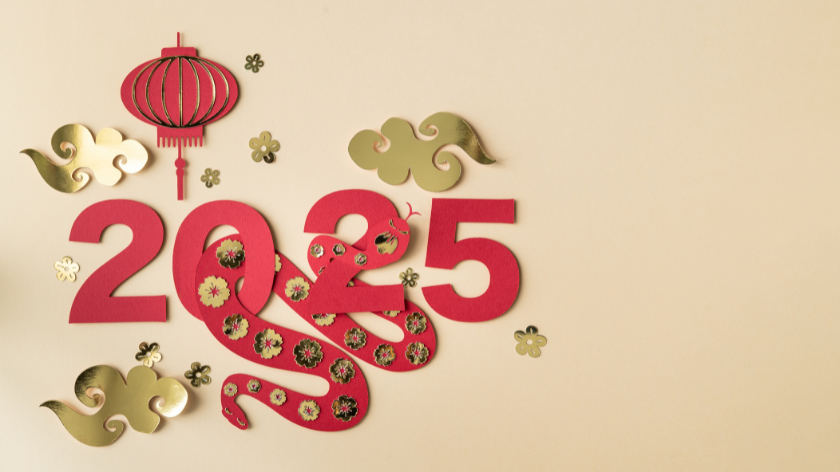
In 2026, Chinese New Year begins on 17 February and marks the start of the Year of the Wood Horse. Knowing what this date represents and why it does not coincide with the Gregorian calendar's New Year helps to avoid cultural misunderstandings and to better plan activities, communications and professional relationships.
A different calendar, a different start to the year
The Chinese New Year is governed by a lunisolar calendar, which combines the cycles of the moon with the movement of the sun. For this reason, its date varies each year and is usually between the end of January and mid-February. In 2026, the second new moon after the winter solstice officially marks the start of the new year on 17 February.
This system of calculating time explains why the Chinese New Year is not directly related to 1 January. It is not a delay or an alternative to the Gregorian calendar's New Year, but a different starting point, deeply rooted in Chinese history, astronomy and cultural tradition.
What the Year of the Wood Horse represents
Each Chinese New Year is associated with one of the twelve animals of the Chinese zodiac and one of the five elements. In 2026, the combination is Horse and Wood, a union that only repeats itself every sixty years. This symbolic system is part of the traditional Chinese worldview and is used as an interpretative framework for the cycle that is beginning.
The Horse is associated with dynamism, initiative, movement and autonomy, while the Wood element symbolises growth, development and expansion. In cultural terms, the Year of the Wood Horse is interpreted as a favourable period for moving forward, promoting projects and adapting to change, an interpretation that influences the collective mindset during that cycle.
A celebration that goes beyond a single day
Unlike other festivities that are concentrated on a specific date, the Chinese New Year lasts for several days, traditionally up to fifteen, and culminates with the Lantern Festival. The festive period is marked by rituals of renewal, family gatherings and symbolic activities aimed at attracting prosperity and balance.
Among the most common traditions are family gatherings, meals with symbolic meaning, red decorations, and the giving of red envelopes with money as a wish for good fortune. These elements reflect values such as continuity, intergenerational respect, and the importance of the group, which are fundamental pillars of Chinese culture.
A holiday with global impact
Although its origins are Chinese, Chinese New Year is now celebrated in many countries and regions around the world. Chinese and Asian communities keep this tradition alive in very diverse cultural contexts, and every year the festival gains greater visibility on an international scale.
For companies operating in global markets or collaborating with Asian partners, this period can have practical implications. Extended holidays, changes in work rhythms and reduced operational activity in certain sectors are common factors during this time of year and should be taken into account in annual planning.
Why it should not be confused with New Year's celebrations
The most common mistake is to assume that Chinese New Year is equivalent to the change of year in the Gregorian calendar. However, the two celebrations respond to different cultural and temporal systems. While 1 January marks an administrative and civil change in many countries, Chinese New Year signals the beginning of a new cycle according to its own calendar.
This difference is not just a matter of dates, but of meaning. Chinese New Year is loaded with symbolism, rituals of renewal and historical references that do not coincide with the usual end-of-year celebrations in other cultural contexts. Understanding this distinction is key to respectful and effective intercultural communication.
A key cultural reference in an international environment
Recognising when the year actually begins for other markets and cultures is no minor detail. In the case of Chinese New Year 2026, correctly identifying the date and its scope helps to avoid confusion in corporate messages, commercial campaigns or shared work calendars.
Beyond cultural anecdote, this knowledge reinforces a professional attitude based on mutual understanding and respect for other cultural frameworks. In a global business environment, knowing that the year does not begin on the same day for everyone is a first step towards working in a more aligned and conscious manner.