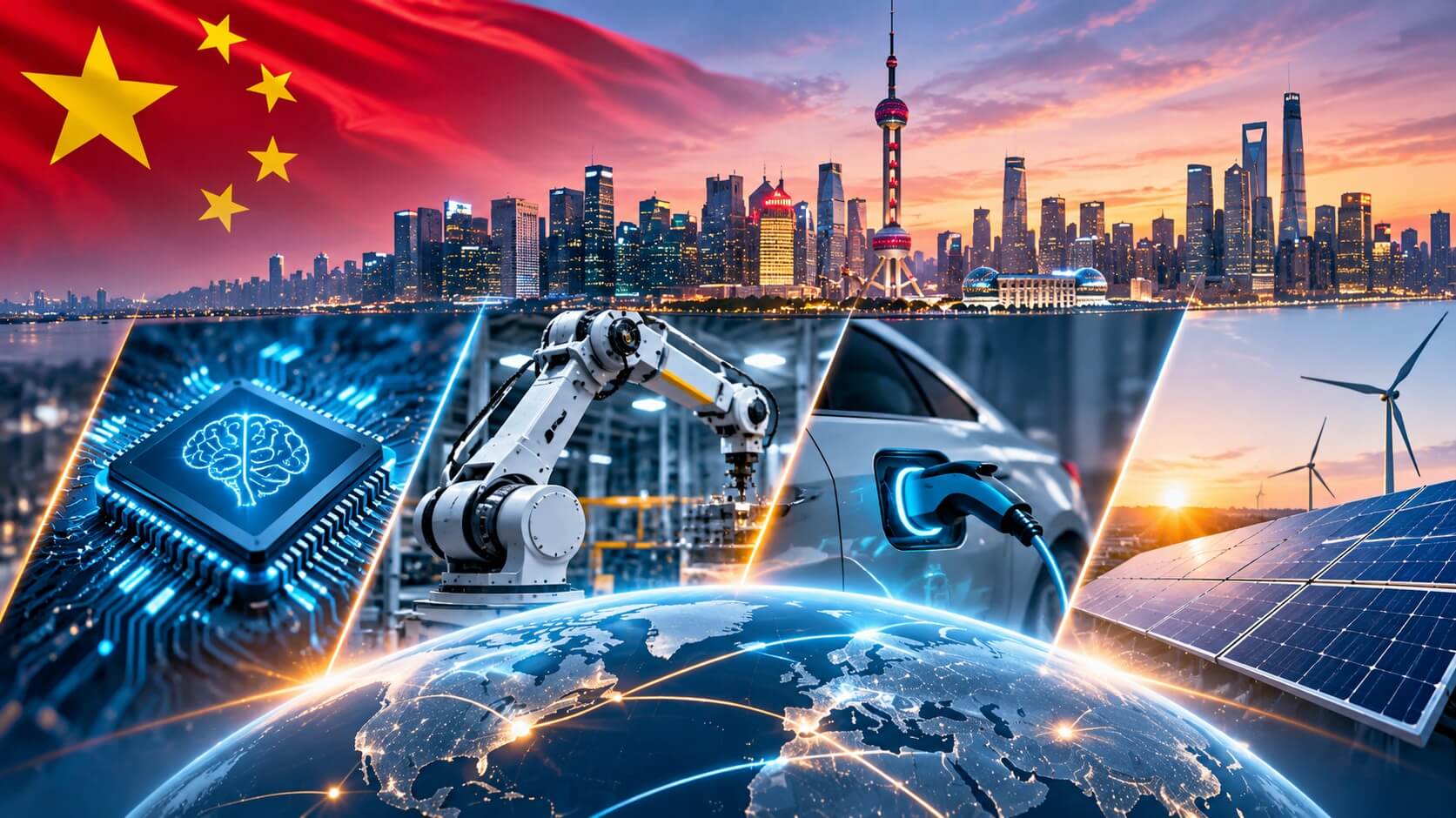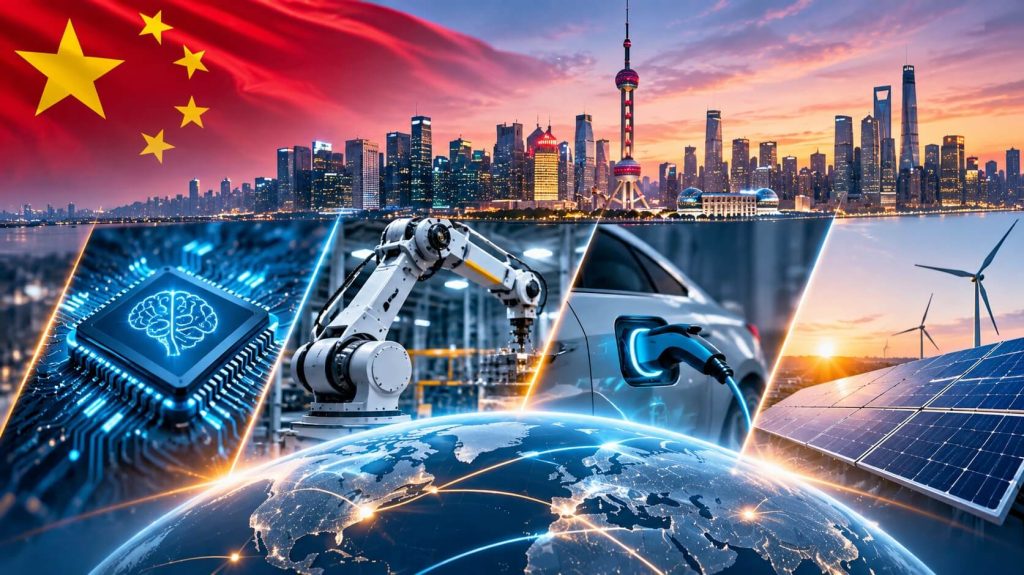
China is no longer merely the world’s factory. It is also one of the planet’s major laboratories for industrial innovation. Artificial intelligence, advanced robotics, next-generation batteries and energy technologies are transforming its productive capacity and redefining the rules of international competition.
2027 is shaping up to be a pivotal year for gauging the extent to which these technologies move from strategic plans to large-scale industrial application. For European companies, understanding this transformation will be crucial for identifying opportunities, anticipating risks and making better sourcing and import decisions.
We analyse four technological revolutions that are worth keeping a close eye on.
1. Industrial artificial intelligence: factories that learn and make decisions
Artificial intelligence is evolving from an exclusively digital tool into a central component of industrial processes.
China aims to accelerate this transition. In January 2026, its government unveiled a plan to integrate AI into the manufacturing sector, which envisages, by 2027, the deployment of between three and five large-scale general-purpose AI models in industry, the creation of 100 high-quality industrial datasets and the development of 500 application scenarios.
These are official targets, not results that have already been achieved. But they illustrate the direction of China’s industrial policy.
What might change?
- Smart quality control: machine vision systems capable of identifying defects during production.
- Predictive maintenance: algorithms that anticipate potential breakdowns and reduce unplanned downtime.
- Production planning: tools that adjust resources, materials and processes according to demand.
- Traceability: systems that enable information to be collected and analysed throughout the manufacturing process.
For companies importing from China, these capabilities could lead to greater production consistency, better information and more efficient processes.
However, the incorporation of AI alone does not guarantee product quality. Supplier validation, technical specifications and independent inspections will remain essential.
2. Advanced robotics: from automation to intelligent robots
The second revolution is taking place in factories.
According to the International Federation of Robotics (IFR), China installed approximately 354,000 industrial robots in 2025, accounting for 59 per cent of all new installations worldwide. This consolidates its position as the largest market for industrial robotics.
But the next leap forward is not simply a matter of installing more robots. China is also driving forward what is known as embodied artificial intelligence (embodied AI): systems capable of interpreting their environment and physically acting upon it.
The MERICS research institute highlights that China has significant advantages in developing this technology, thanks to its ecosystem of industrial robotics, electric vehicles, sensors and components. It also warns of technological dependencies and outstanding challenges.
Looking ahead to 2027, we could see advances in mobile robots, material handling and applications of humanoid robots in industrial settings. However, their widespread commercial adoption remains uncertain.
What does this mean for industrial sourcing?
Automation can improve repeatability, precision and production capacity for certain manufacturers. But it also introduces new criteria for selecting suppliers: actual level of automation, maintenance, technical training and responsiveness to incidents.
The question will no longer be solely how much a supplier can manufacture, but how it controls its production process.
3. Batteries and electric mobility: China is reshaping the energy industry
The third revolution centres on batteries and electric mobility.
China has built an industrial ecosystem that integrates processed raw materials, components, battery manufacturing, electric vehicles and storage technologies.
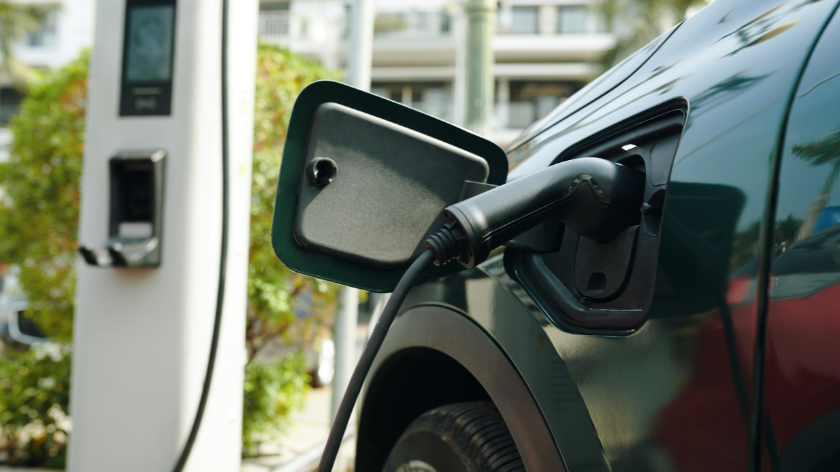
According to the International Energy Agency (IEA), by 2025 China accounted for around 75 per cent of global electric car production and over 80 per cent of battery cell production. Furthermore, electric vehicles accounted for approximately 55 per cent of car sales in the Chinese market.
Advances in lithium iron phosphate (LFP) batteries, research into sodium batteries and the development of new storage solutions are opening up opportunities for numerous sectors.
Their applications extend far beyond the automotive sector:
- Electrified industrial machinery and equipment.
- Stationary energy storage systems.
- Electric material handling and mobility equipment.
- Power supply and backup solutions.
The outlook for 2027 will be shaped by developments in costs, safety, energy density and the ability to industrialise new battery chemistries.
For importing companies, these opportunities also entail additional requirements: type approvals, testing, technical documentation, product safety and compliance with European regulations.
The competitive advantage will lie not only in accessing new technologies, but in doing so with proven suppliers and products suited to the target market.
4. Clean energy and advanced manufacturing: the new scale of the energy transition
The fourth revolution is the transformation of the energy industry.
China has established a dominant position in several clean technology supply chains, particularly in solar photovoltaics and batteries.
The IEA’s Energy Technology Perspectives 2026 report notes that China accounts for around 85 per cent of production capacity in the solar sector and 80 per cent of that for lithium-ion batteries. For certain components, such as photovoltaic wafers, this concentration reaches 95 per cent.
This industrial scale is influencing costs, the availability of components and the competitiveness of numerous international energy projects.
What can we expect in 2027?
It is reasonable to anticipate greater competitive pressure in the energy equipment markets, advances in production efficiency and a growing range of solutions for energy generation, storage and management.
However, this concentration also poses risks: geographical dependence, trade tensions, regulatory changes and potential supply disruptions.
For European industrial buyers, the challenge will be to strike a balance between competitiveness, security of supply and regulatory compliance.
What do these four revolutions mean for European companies?
China’s technological transformations do not only affect major manufacturers in the automotive, electronics or energy sectors. They may also alter the conditions under which machinery, components, materials and industrial products are purchased.
The opportunities are significant: access to new manufacturing capabilities, product development, productivity improvements and potential cost advantages.
However, a more advanced industrial environment does not eliminate the risks associated with importing. In some cases, it makes them more complex.
Before adopting a new technology or selecting a manufacturer, it is advisable to answer four fundamental questions:
- Does the supplier have demonstrable technical and production capacity?
- Does the product comply with the specifications, certifications and requirements of the target market?
- Are there quality control mechanisms in place during production and prior to dispatch?
- Have the total costs, lead times and supply chain risks been assessed?
This is where professional sourcing becomes particularly important.
Conclusion: 2027 will be a year for observing, assessing and taking action
China is transforming its industrial model through four major drivers: artificial intelligence, robotics, batteries and energy technologies.
Not all of these will evolve at the same pace, nor will they all achieve widespread adoption by 2027. But their effects are already being felt in international supply chains.
For European companies, the aim should not be to incorporate every new technological development, but to identify those that bring real value to their business.
In a rapidly changing market, an understanding of the Chinese industrial landscape, a presence in the source market and a rigorous sourcing approach will be decisive factors in ensuring that imports are carried out with controlled risks.