In our latest newsletter, in the ‘SOMETHING entirely DIFFERENT’ section, we discovered that video games are among the 10 most popular hobbies in China. It is a pastime that goes far beyond mere entertainment and has just reached a new milestone: the video games market in China has, for the first time, exceeded 50,000 million dollars in annual turnover.
This figure confirms the enormous significance of this industry in China, where millions of people play games every day on their mobiles, computers and consoles. But what lies behind this growth, and why has China become one of the world’s leading video game powers?
China’s video game market hits record figures
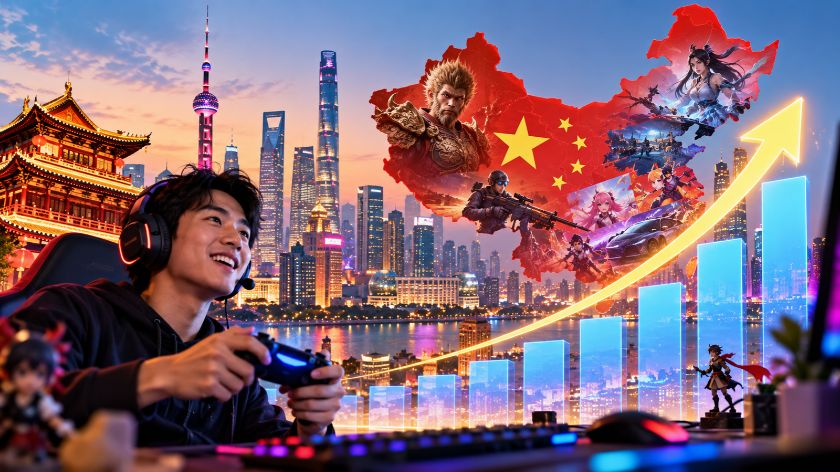
According to a report published in September 2026 by the consultancy firm Niko Partners, the Chinese video game industry generated $51.8 billion in 2025, 5.4 per cent more than the previous year.
Forecasts suggest that this growth will continue over the coming years:
- 2025: $51,800 million in turnover.
- 2026: $53,900 million forecast.
- 2030: $59,800 million estimated.
Furthermore, the country is expected to reach 769 million gamers by 2030. This figure reflects the extraordinary scale of this market and its importance within China’s digital economy.
Why are video games so popular in China?
The success of video games in China stems from a combination of technological, cultural and social factors. The proliferation of smartphones, easy access to games and the development of digital platforms have made gaming one of the most widespread forms of leisure in the country.
However, there are certain distinctive features that help us better understand the habits of Chinese gamers.
Mobile games and mini-games
One of the key features of the Chinese market is the importance of mobile video games. Their accessibility means players can play at virtually any time, without needing a console or a dedicated computer.
Also worth noting are so-called ‘mini-games’ – quick-play experiences that run within apps such as WeChat or Douyin and do not require installation. According to Niko Partners, 80 per cent of Chinese gamers have tried this format, which already accounts for nearly 20 per cent of spending on mobile games.
eSports and gaming communities
Electronic sports, known as eSports, also play a prominent role in Chinese digital culture. Professional competitions, live broadcasts and fan communities have turned video games into a spectacle that goes far beyond simply playing.
In fact, 51.3 per cent of Chinese gamers have been involved in the world of eSports in some way, whether by playing, following competitions or taking part in tournaments.
Social media influences preferences
Social media plays a key role in the discovery of new video games. 41 per cent of Chinese gamers use short-form video apps to find out about new titles and access information about them.
Platforms such as Douyin, the Chinese version of TikTok, have thus become essential channels for spreading trends within the industry.
China no longer just consumes video games: it also creates them
For years, China has stood out for the size of its domestic market. However, its industry has also made significant strides in developing video games capable of competing internationally.
Companies such as Tencent and NetEase have a prominent presence in the sector, whilst studios such as miHoYo, the developer behind Genshin Impact, have managed to attract players from all over the world.
Another example is Black Myth: Wukong, a video game inspired by Chinese literature and mythology that achieved enormous international success following its release in 2024.
This phenomenon demonstrates that video games can also become a tool for cultural dissemination, bringing traditional Chinese stories, characters and elements to audiences in other countries.
Artificial intelligence is also transforming the Chinese video game industry
Artificial intelligence is another trend shaping the sector’s evolution. Chinese developers are incorporating these tools to create content, optimise processes and offer more dynamic experiences to players.
According to data from Niko Partners published in 2025, 60 per cent of the Chinese studios surveyed were already using generative artificial intelligence in their development processes.
Its application opens up new possibilities, from characters capable of holding more natural conversations to virtual worlds that evolve according to each player’s decisions.
How far can the video game industry in China go?
Forecasts for the coming years point to sustained growth, driven by technological innovation, new gaming formats and the international expansion of Chinese developers.
But the phenomenon goes beyond the figures. Video games reflect how leisure habits are changing in China and how the country is consolidating its position as a creator of digital content and cultural trends.
What began as a hobby shared by millions of people has become a multi-million industry. And all the signs suggest that China will continue to be one of the key players in the future of digital entertainment.